Sunday, December 15, 2013

Digitalized Education and the Need of New Technologies


It is very necessary for English teachers to discover the world of new technologies and continue always exploring them. We live in an era where the education is gradually being digitalized and  there is always the need to learn something new about the innovations in the world of technologies for education. Nowadays, the young generations tend to use different technologies for different things, which we were not using at their age, such as reading, playing video games, receiving information instantly through technologies, etc. Thus, as TEFL professionals, we need to always be upgraded with the latest technological innovations for being able to transfer the knowledge to our students by using the new and efficient ways of teaching.
The diverse technological tools that we learnt about were very useful for understanding the possible ways of making our teaching process more informative, interactive, engaging and interesting. There are some types of technologies which I'm definitely going to use in my teaching. Such as the blogs, which give the learners the opportunity to become network creators and users, and provide the interactive learning environment for them. Feedly.com is awesome tool for making the information start looking for you; thus by subscribing to different sources, the learners will be able to create their life-long and autonomous learning environment for them. The different applications of google, which are again very helpful for creating the collaborative learning platform for the learners, e.g. I will use google drive for creating google docs, google sites for them to create their online portfolios, google groups, for discussions outside the class, etc. Video games are also going to be used with the low level students. Podcasts are very rich tools for listening exercises, which I will use too. For helping them to produce the language they learn, I will use the digital story-telling.
Thus, I'm very glad that I had the chance to take the course "New Technologies in TEFL" which gave me a broad understanding and also experience in the application of the new technologies for teaching and learning purposes. Finally, it taught me how to become a life-long and autonomous learner, which, in my turn, I will teach my students.

Monday, December 9, 2013

Cloud Computing and Google For Education


Cloud computing is a concept which is used to describe a large system of computers which are connected to each other through a real-time communication, when there is the chance to run a program in different computers at the same time. In this case the real server hardware is replaced by a virtual hardware, which does not physically exist and therefore can be moved around like a cloud.
In fact, cloud computing changes our work as teachers. It mainly affects on our work positively, but, of course, it also has some drawbacks. Due to cloud computing we can create one document and have multiple users in it, thus, fostering collaboration between the learners. Besides, with the help of cloud computing, we do less downloading. We just log in to different softwares and start using them. Thus, it is more economical in terms of the software and hardware. Moreover, there is no need for big IT teams for schools or other educational institutions. However, cloud computing makes us be too internet-dependent, as because of different reasons when there is an internet connection breakdown, all the system connected computers can't have internet access. There might be also some issues connected with the privacy or confidentiality of the data stored in the cloud. When it comes to Google for education, it has different applications which can be used by teachers. Some of them are really good for creating a collaborative platform, where the learners can learn in an interactive way, such as Google drive and Google sites, Blogger. Other applications can also be helpful, such as Google book search, Google Sky, Google Calendar, etc.

More information is available via this link: http://www.youtube.com/watch?v=88ysB-EKA9U

Friday, December 6, 2013

Analytics in Learning


It is well-known that carefully designed data collection leads to data-driven decision making in different fields along with in learning processes. It is obvious, that this kind of evidence will be more objective and reliable, than the evidence based on personal experiences of individuals. Thus, according to Long & Siemens (2011), data-driven decision making improves the organizational output and productivity.
Due to learning analytics the data about the learners can be measured, collected, analyzed and reported, the purpose of which is to understand and evaluate this or that issue connected with their learning and the environment in which the learning occurs. Learning analytics can provide evidence about the success and also challenges of the learning environment, i.e. institutions. It means that the further steps can be taken according to the results of the reported data. Another advantage that it provides, is that the learners get up-to-date information about their own learning and try to improve it based on the evidence given by the learning analytics. Thus, with the help of the learning analytics the quality of the teaching and learning can definitely become more efficient.

More information is available via this link: http://www.youtube.com/watch?v=KqETXdq68vY

Sunday, November 24, 2013

Learning Management Systems & Personal Learning Environments


Due to technological innovations it is possible to manage your learning in a very organized, effective, interesting and accurate way. Among those technological tools are LMS and PLE which are different from each other, but both contribute to community learning.
LMS is usually set by an institution, e.g. it can be a university. LMS gives the learners the chance to access and obtain the content, perform different kinds of activities, receive feedback, etc. It can be characterized as a centralized tool, where the center of learning and performing activities is the same tool for all the community members. Due to LMS the learners access to the collaborative environment, but with the condition of having their own accounts, otherwise communication is impossible. When performing different activities, a lot of data is accumulated there. The thing is that when you decide to leave LMS, the data remains in the system, and it is not managed by you, but by the LMS. While in PLE you manage your own data, as it is already decentralized as compared with LMS. It means that the center of the system is you and you can access to your content from different places of the web.
Both types may have their limitations and advantages, but, anyway, these are good means of community learning, sharing ideas, etc.

For more information please go to this link: http://www.youtube.com/watch?v=zDwcCJncyiw&feature=relmfu

Monday, November 18, 2013

Distance Language Learning


It is well-known that nowadays direct face-to-face communication can be replaced by online communication. It means that learning through direct instruction can be replaced by distance learning by means of technologies.
I think that for educators direct teaching is more easier, when there is face-to-face communication and interaction, when the educator can see and feel everything that happens during the learning process. While in distant teaching more energy and effort is needed from the educator to convey all the material properly and to reach all the learning objectives. I, personally, have never done distance tutoring, but I think that it would be difficult to first of all observe the learner and identify his/her needs. It would be also challenging to provide immediate feedback to the learner. All in all, everything depends on different kinds of technologies.
In spite of all the difficulties that distance learning may create, it is a very good means for the learners who live, for example, in remote areas and don't have good teachers in their area. Or, if someone's teacher has to leave to somewhere else, in this case distance learning will help them not to interrupt the process of teaching and learning.
In distance education the teachers should follow several maxims, which are also necessary in face-to-face education, but are more critical in a distance education. First of all the educator should empower the learner, for making him/her more encouraged, motivated and confident about his/her abilities. The educator should also be open, i.e. the learners should always feel free to sent the educator mails whenever they have questions connected with the lessons. The factor of being honest from the part of the educator is also very important, as they need to always tell the learners the truth about their language competence or performance progresses. Also, the educators should always provide appropriate explanation of any linguistic issue being explained, as in a distance learning they should be very careful for the learners to not miss a point.
The learners have also a lot of work to do by themselves, as in distance education they have to be more autonomous learners. They have to manage their self-management and initial motivation at first. They have to be more watchful so as to plan their work carefully. They also have to identify the learning strategies which work well for themselves. It would be better if the teacher also were aware of their learning strategies, because in that case the instruction would directly fit the learners needs.
Thus, we, as language teachers, should be very careful and aware of these factors which directly affect on the quality of distance learning.

For starting your own distance learning you can create an account with either http://www.livemocha.com/ or
http://www.busuu.com/ .

Monday, November 11, 2013

Open Sources and Educational Resources


Nowadays open sources and educational resources have become very significant tools for all people around the world. They give us the chance to feel ourselves in the shoes of global citizens. They somehow create equal opportunities for all to get to know any thing they want irrespective of their rank or other things.
Open sources refer to any kind of computer programs which are free for the general public to use. They provide social and interactive learning.
Educational resources have specific educational purposes. E.g. there are a lot of free online courses which can be very beneficial for people who are eager to learn.
Thus the most significant advantage of the OER is that it gives people the opportunity to become life-long and autonomous learners.
Here you can find a list of open courses:

Sunday, November 10, 2013

MALL in TEFL


The need of mobile phones is huge in our lives. When I want to call someone, I turn to my mobile phone, when I want to listen to music, I turn to my mobile phone, when I want to record a talk, guess what I do? I turn to mobile phone, when I want to access the internet, I again use my phone. I'm sure that many many people do the same thing. Thus, they are the inseparable part of our life nowadays. Almost everyone has a mobile phone, and besides using them for calling or receiving calls, they are also used for language learning purposes. In my opinion, the most essential benefit that the mobile phones can give EFL learners is the development of the listening skills. E.g. learners can record a talk, then listen to it, or, if it is a smart phone, it can be used for listening to podcasts etc.
Reinders (2010) mentions 20 ideas for using mobile phones in a language classroom. I will outline some of them in my blog. One of those ideas is taking notes in the phone. I think that it's really useful for taking notes and later using them for recalling some information or for writing down unknown words and then clarifying their meanings. Another function mentioned is the ability of taking photos of texts. For example, one of our classmates, Nelli, always does that after curriculum design class. She takes the photo of the homework assignment from the slides and later posts in the facebook for rest of us to use. Another function is using it for making flashcards. When I was observing one of my classmate's class at the Argentinian school, she actively used her ipad for flashcards for teaching the times. The function of the circular writing is also in the list, but I think that it is not the type of writing skills we need to develop, because it is mainly colloquial and full of contractions, slang, jargon, etc. But if the phone has the internet connection, it can also be used for writing blogs, in this case it fosters the development of the writing skills.
In my opinion, using mobile phones during classes has also its limitations, as students are very often distracted by facebook or other things. So, we have to be very careful when implementing the usage of mobile phone in TEFL. I think it's better to use them with high level students, as they are more conscious to really get the meaning of using phones in the process of language learning.

Sunday, October 27, 2013

Application of 'Second Life' to TEFL

                               
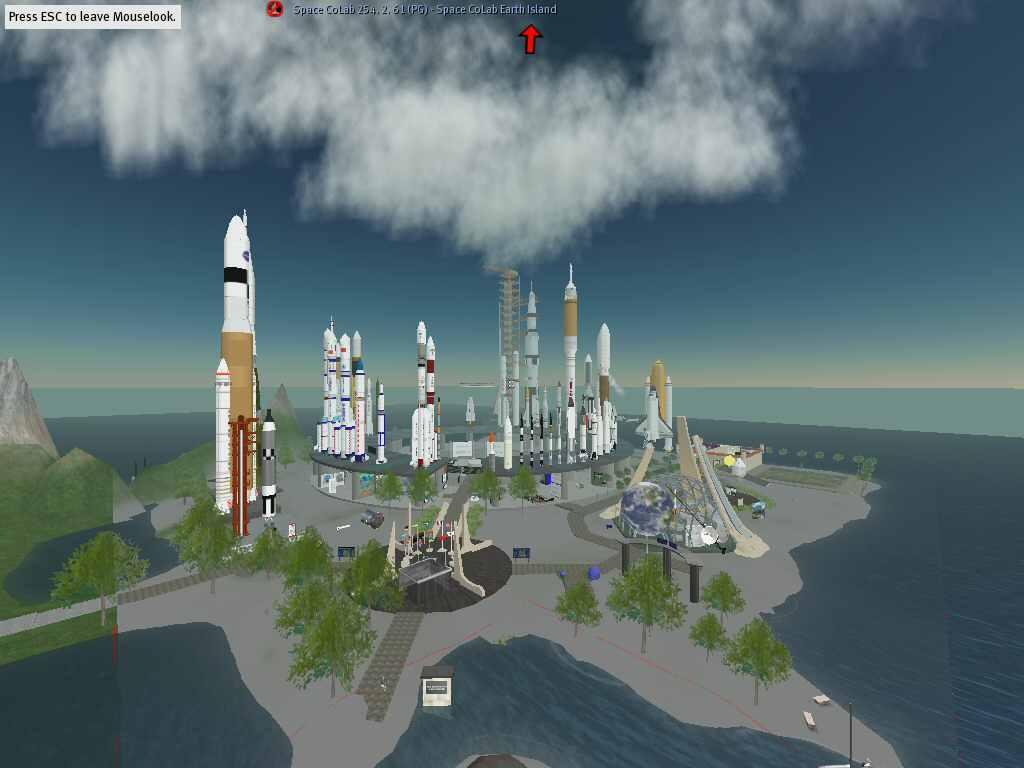
New digital technologies give us the opportunity to live not only in our usual 'First Life' but also to shift to another world and do different kinds of things which we usually do in our life, e.g.walking, speaking and different kinds of acts. The difference is, though, that in 'Second Life' we have an avatar, which does everything we ask him to do. But, anyway, when sitting alone at home, we can have the feeling of being integrated into a communicative environment and interact with different people (avatars of other people). Thus, online, virtual 3D worlds offer the opportunity for users to interact in real time with native speakers of the language they are learning.
Actually, there is a little research done on the usefulness of 'Second Life' to TEFL, but, in my opinion, they create a total immersion in the foreign language learning environment (excluding the attempts in getting used to the environment, connected with technical issues). When I first tried to enter 'Second Life', first of all I had to figure out things like who am I in the environment, how can I interact with people, what should I do in general. This took not so long, and later I was immersed in an environment where language was used intensively. So, I can say that 3D environment provides communication through language and negotiation of meaning.

A research was conducted on foreign language vocabulary development through activities in an online 3D environment. The purpose of the study was to find out how the immersion in a 'Second Life' environment  affected on the improvement of the students' vocabulary and language fluency. Of course, there were both advantages and limitations. According to the case study the immersion into a 3D virtual world can create a viable language larning environment, regarding to vocabulary enrichment and fluency development. I also want to mention some of the limitations, such as the cost and time set for learning environment. Besides, we should create security for young learners, because, as in real life, in 'Second Life' aslo they can appear in inappropriate situations.
Eventually, further research needs to be conducted in this field, so as to find out the basic functions of 3D virtual world, especially its influence on the language learning process.


Monday, October 21, 2013

DGBL (Digital Game-based Learning)


Digital game-based learning is one of the most discussed areas in the field of digital technologies in learning.
When reading about this topic I remembered my childhood when I was sitting in front of the computer and playing video games for hours. My parents didn't ever forbid me doing that, they even sometimes played with me which gave me more motivation in that. I turned the computer off when I was already bored of the games. Later I started to get bored sooner, because everything was already the same and I couldn't find anything new for me to discover in those games. It is followed to say that the learning from the games had already happened, and there was nothing new for me to learn. 
Video games first of all provide children problem solving and critical thinking skills. They become creative, especially when they not only take the role of a consumer, but also the role of a producer.
With digital games learning is produced within a certain context, e.g. they don't have to read about the games and then go and play it according to the instructions. They just start observing in the context themselves which fosters their consciousness raising skills.
When playing a digital game children are not afraid of making mistakes and of being assessed. Actually, assessment happens at every moment in games, which is fun here as compared with the assessment in classrooms.
However there are also some risks in using video games. The thing is that not all the games are of good quality. One of the dangerous things is their getting addicted to some games, thus forgetting everything rest in the world. This is, of course menacing their health, e.g. the eye-sight. Moreover, computer games can be violent in their nature and affect negatively on children's character and the whole psychology. So, parents should be very careful at first stages in choosing the right games for their children. they should also often play them with their children to understand the content better and its affects on the child.
DGBL is also applied in TEFL. Games can engage children in practicing both receptive and productive linguistic skills. E.g. I leaned a lot of vocabulary items from the game "Tekken", like "start, play, exit, enter, turn on, turn off, game over, time is up, win, lose, perfect, etc.". The football game was good for developing my listening and reading skills, etc.
Eventually, technology helps children to learn in new ways and to create the models of what education might be like in future.

Thursday, October 17, 2013

The video production project.


Nowadays video production can be a good tool for making different tutorials for the students.
The process of groupwork for making our own videos was the best and the most interesting groupwork in AUA life. I was so enthusiastic about that, that I decided to work with two different groups. The video shooting process with the first group was more easier than with the second one, because it was a very authentic one and the action was all there ready for us. We had only to go to different places and to take shots. What about the second video, it took 3 whole days for us to think about the script and to shoot it. The video production process was really very interesting, difficult and also fun. The thing is that we decided to be the actors ourselves and to shoot the videos in many different places. There were even some parts which were successful only after the 30th attempt. The problem was that we needed other people also to be in the cast ( I want to say thanks to the students of other departments who agreed to cooperate with us, namely Balu, Vahagn, Mnatsakan, Narek and Ararat) and also the time was very short for making such a video, besides we had to keep it as short as possible. But, anyway, the separate parts are ready and Ripa Karapetyan is the editor, so lots of thanks to her for taking that huge responsibility. We hope that the video will be ready for tomorrow's class and we will enjoy it together.
The video tutorials were very informative and helpful for our own video production project. Me and my classmates were discussing that after watching the tutorials and having all this experiments we will approach different films and also video tutorials more critically than before. Eventually, this was a good step for us to make our own video productions for language learning purposes as language teachers. And also, who knows, maybe one day we'll become film stars as we already have the experiment.

Monday, October 7, 2013

Digistories.

Reading or listening to stories has always been a very unique kind of learning tool for all of us. I think that people of all ages love to both listen to and tell stories to others. Nowadays we can make the process of telling stories more impressive, powerful, useful and motivating due to digital technologies.
I remember the times when my mom and grandma told me different kinds of stories and I always tried to imagine that beautiful world that was created by their words. But now the world of digital technologies gives us the opportunity to create stories with visuals, sound, and motion. All this factors make the stories more authentic, motivating and engaging.
One of the most significant benefits that digistories give the students is that they become producers, i.e. they do all the work themselves, they search, download, choose, record, type, add and do other kinds of functions all themselves and finally create a whole story. Thus, there is a diversity in the style of the learning of the students, i.e. they are not always consumers, but also producers.
According to different research, digistories affect on the students' learning and engagement very positively. They foster active and communicative learning. Besides, it give the learners the opportunity to share their personal stories with their audience, stories that they cannot express or share in real communication. It means that they combine their knowledge gained in the class and what they know outside the class. It also gives the students their own voice, i.e. by creating a story of their own they acquire the sense of ownership and also self-confidence. Other important skills that digistories can develop are as follows: the ability to actively use digital technologies, to become more creative, to retain their knowledge longer, etc.
However, in one of the research there was a question unidentified, whether digistories foster critical thinking or not. In my opinion, they do affect on critical thinking, because when making the stories through different technologies (be it power point, movie maker, storyboard, etc.) they have to think about who are their audience, about the succession of the visuals, about the corresponding music, the content of the story and other kinds of issues.
Finally, digistories affect on the students' linguistic skills; they become better readers, writers and speakers and listeners of the language.
For watching some examples of digistories, please visit the following websites:
And this is a sample of digistory created by one of my friends: https://www.youtube.com/watch?feature=player_embedded&v=FbeV9GZLK7s#t=0

Saturday, October 5, 2013

Using 'Wikis' in ELL

Using 'wiki' is a very popular approach to online community development. According to Cunningham (2001), wiki is a freely expandable collection of interlinked webpages, where each page is easily edited by any user. Different contents can be linked to other wikis or Web documents.
As I have understood, one of the good opportunities that wikis give the instructors, is that they can create interactive activities for their students. From my own experience I can say that wikis mainly develop the learners' reading and writing skills. When one of the students posts a content according to a specific instruction, and the other has to continue the previous student's piece of writing, it mainly affects on their critical reading and writing skills. While reading the students have to continue their thoughts based on the other students' writings. I want to mention that in wikis the writing process is asynchronous, i.e. the writing cannot be done simultaneously by different students. It also creates coherence in their writing, because they have to use words of coherence so as to better connect their ideas to their coursemate's ideas. So, using wikis can be a good tool for developing the students' language proficiency, in terms of reading and writing skills, besides for creating a good sense of collaboration and interactive work.


Sunday, September 22, 2013

Using Podcasts in ELL

As we know the internet audio-listening has greatly increased its popularity. Podcasts have been used for English learning purposes. I think that they mainly influence on the learners' listening, vocabulary and speaking skills.
I want to refer to a reasearch which was held in the University of South Carolina. The researchers examined the effects of using podcasts to improve pronunciation in SLL, and how students' attitudes changed toward pronunciation over the semester. The participants in this study were 12 learners of German and 10 learners of French. According to the statistical analysis there were no significant differences in the students' pronunciation from pre-test to post-test over time. Only french students had some improvements in their comprehensibility and accentedness. As for the extemporaneous tasks, students in both languages showed little improvement. This was mainly because of the students' concentrating more on the meaning than on the form.
To tell the truth the results mentioned above were a little surprising to me. I can say from my own experience that using podcasts can be very effective for english learning purposes, mainly in terms of improving listening and speaking skills. I felt the imrovement especially in my listening skills. It also directly affected on my pronunciation skills. I feel very comfortable in using podcasts for improving my linguistic skills. While practicing my pronunciation I tried to concentrate more on the form than on the meaning. Of course understanding the meaning is the first stage, but later I concentrated more on the form by doing a lot of repititions and self-recordings. So, one can, for sure, benefit from using podcasts for improving the linguistic skills.

Thursday, September 19, 2013

Using Blogging and Microblogging in ELL

My love and interest increases towards blogging and microblogging day by day. This process of learning is really more engaging, meaningful and interesting for me. I think that I will be able to implement both the blogging and microblogging in language teaching processes. I think that learning with blogs can be used beginning from the intermediate high level students, because they are more able to recognize for what purposes blogs are going to be used. It would be more convenient to use blogging in computer labs than in usual classrooms. When introducing the necessity of using blogs to my students I would point out the following things: that blogs are more useful than usual notebooks, because in this case the blogger has more responsibility in what he/she is writing, because it is going to be shared with a wide audience. Besides, blogging is more interactive, where you don't only write for yourself and your teacher, but also for the community you are in. Moreover, the students can develop different computer skills by using blogs. So, in their blogs students would refer to their daily lessons, would write summaries of different texts, would comment on other's blogs, etc.
What refers to twitter, I would suggest my students to use it in the case they would like to, which would be for short tweets, basically refering to the difficulties in understanding something, or, vice versa, to something which they liked, and also could make some suggestions. Microblogging, though, doesn't have to be about the learning materials necessarily. It may be about the students' daily plans and other casual things. But, anyway, this is a way of using the language, and also a way of interacting and communicating by that language. So, in my opinion, both blogging and microblogging create an environment for active learning.
Evaluation is an important aspect for both the teacher and the students. I would not grade the students for blogging and microblogging, but I would provide some comments on the content, writing accuracy and fluency, lexical complexity and other linguistic aspects.
I think that there would also be some challanges for the students who are a little behind the others in terms of their knowledge and abilities. For example, they might be shy or might feel not confident to share their piece of writing with a wide audience. For this case my suggestion is to ask those students to actively read the posts of their friends, and to make their first steps by leaving comments on their posts, thus getting used to the process. They could also show their piece of writing to the teacher before posting it, till they would be able to do it by themselves.

Wednesday, September 18, 2013

Developing Writing Fluency and Lexical Complexity with Blogs.

Nowadays blogging is becoming a very essential tool for alternative assessment and for diary writing. In my previous posts I have mentioned some of the main skills that blogs can develop, like critical reading and thinking, sense of ownership, computer skills, etc. Now I want to add two other important skills which blogs can develop: the writing fluency and lexical complexity.
There has been conducted research in a university in Japan. The researchers integrated the university language learners into a seven-day intensive English course. The students' language proficiency level was low and the aim of the researchers was to find out their achievement in writing blog entries in terms of writing fluency and lexical complexity. So, the researchers describe the writing fluency by comparing the number of words and word frequency levels. While the lexical complexity is described by the difficulty level of words based on the frequency with which they normally occur in written English. During the research the students increased their critical reading skills dramatically, as they were not only writing their own blogs, but also they were reading the other students' blogs. After synthesizing and analyzing the blog entries of their classmates,they were actively commenting on each other;s blogs, thus making the process become more authentic.
Finally, the students' blog entries showed an overall increase both in their writing fluency and lexical complexity skills. According to the research results, the average word count for student email postings to the class blog showed an increase of nearly 350% (on the first day 31.5 words, and by the end of the program 121.9 words.). The lexical complexity level of the blog entries also increased. The words that were considered to be difficult for the students started to occur more frequently in the texts.
We can conclude that the blogs work very effectively in the language teaching and learning process. It is evident from both the researches done, and from our own experience of working with blogs as MA TEFL students. Now I'm thinking of some strategies which will help me to use blogs for language teaching and learning purposes.

Friday, September 13, 2013

About Will Richardson's "Weblogs in School".

My own perception of using blogs in schools is very positive, and reading about Will Richardson’s ideas about blogging in school was very helpful for me as a TEFL professional. In my opinion weblogs affect directly on the learners’ motivation and engagement. This interactional type of learning process develops a sense of ownership, critical thinking, good reading and writing skills.
According to Will Richardson, the usage of blogs in schools enhances better learning, besides blogs can serve as an archive for collecting your ideas and later coming back to them, if needed. He states that it has a special influence on teaching reading and writing skills. When they write they know that it  is going to be available not only to their teachers, but to a wide audience. Another important thing is that we should teach the learners read before writing. They should read different sources, analyze, synthesize, criticize, and then write their own posts.
Blogging also fosters collaboration between the learners. They not only learn from the sources they read or listen, but also learn from their peers, from other people’s reflections.
According to Richardson, the digital world of blogs differs from podcasts, wikis, videos, etc, because it makes the learners become network creators and users.
In future I will use teaching through blogs, because I can feel from my own experience, that it makes the learning process interactive, meaningful, modern, helpful for a wider community. I would use that for them to reflect on the activities done in the classroom, also on the homework assignments. Besides, there has been done a research in the EEC program of AUA, according to which teaching via weblogs is effective and promising.
For more information please visit this link:  http://www.youtube.com/watch?v=3_5F_zcOJ3o

Sunday, September 8, 2013

Reflection on the connections between the three sources

       After watching all the videos I realized that there is something important, which connects all the three sources together: that is the technology.
       According to Sugata Mitra's "A Hole in the wall" project, interest in children has a great role in the learning process. That we could clearly see in all the videos of Digital Youth Portraits. All the teenagers were interested in what can technologies do and how it can help them become what they want to become. I think that interest is the first prerequisite of going deep into the world of learning through technologies. Besides, Sugata Mitra mentions that children in groups can self-instruct themselves. He says that even the language is not a barrier. If they have a computer, they can learn themselves, but it had to be in groups. The same picture was seen in the Digital Youth Portraits, where children in groups are powerful and they can learn, create together through technologies, and teach one another.
        According to Thomas Friedman's "The world is flat" book, when the world becomes flat, the relationships between people becomes horizontal, and, as a result they learn how to collaborate. So they become connected again through technologies, which was again the main theme of the other two sources.                  So, technologies are not only tools for getting information, connecting with others and for teaching and learning, but they have also become the part of our lifestyle.
             

Saturday, September 7, 2013

About the flatteners discussed in Thomas Friedman's book "The World is Flat".

The book “The World is Flat’’ describes the brief history of the 21st century. It discusses such questions as why is the Earth becoming flat, what are its consequences, the challenges it causes to countries, etc. The book has three chapters, where the 1st chapter discusses globalization and the three main ways by which it is expressed. The 2nd chapter talks about the 10 flatteners, which I will expand on, and the 3rd chapter is about the Triple Convergence.
I will focus on the 2nd chapter and will talk about those 3 flatteners, which I find the most amazing. The first flattener discussed by Thomas Friedman is the collapse of the Berlin Wall. In my opinion, this is a very good example for understanding the power of human connectivity. The wall, that came down resulted in the collaboration of the western and eastern policies. And, as a result, windows came up which became good ways of communication between the two sides. I think that this is a very good example of a flattener, because when there is a wall between two sides, then the interconnection between them is vertical, i.e. they have different ideologies, by which each tries to rule the other. But when there are windows instead of the high wall, then the connection is horizontal, which means that they already have one world which is flat, and where people communicate, collaborate, work, create and do everything together and together they become a part of the flat world. The case of the Berlin wall is only one example of such kind of flattener, when due to a revolution people unite and create a united world. Such kind of things happened in different parts of the world during different eras.
The next flattener discussed by Friedman I find the most global one, which can be considered the main basis of globalization. That flattener was the Netscape, which gave the Internet browser, and which became accessible for all the people all over the world. That really made the world from big into tiny, i.e. made it flat, again from the point of view of the globalization. So, when the internet is interconnected in all over the world, it means that we have become very close to each other, irrespectable of the distance.
The 3rd type of flattener that is very significant is the “Steroids”, which includes the wireless devices, such as mobile phones, I-pads, instant messaging, also the voice and visuals through the internet, etc. Thus, anytime, from anywhere we can connect to people in different parts of the world.
However, I disagree that the world has become completely flat. Maybe that could happen in future, but still there are countries where the usage of the internet is restricted, like in Saudi Arabia, Vietnam, Turkmenistan, etc. Though, maybe these countries undergo globalization through different revolutions or habits, but not through the technologies. So, in my opinion, the world cannot be absolutely flat.
This idea has some implications for teaching and learning. I think that this is mainly related to the technologies as a flattener. E.g. through the internet a lot of people do distant learning, besides they get the information they want, and organize their self-learning process. Thus, it has a lot to do with the teaching/learning process.


Reflection on Digital Youth Portraits.

           While watching the digital youth portraits, the first thing that came to my mind was the difference of the learning opportunities of my generation and that of those teenagers. I realized both the noticeable progress of the technology and its power in the learning process. It has already become the inseparable part of both their learning process and their life in general, and they have the opportunity to learn in a very communicative and interactive environment. One of the striking things in those videos was that the children know exactly for what they use the digital technologies, such as social media, networks, digital videos and games, mobile technologies, computers, etc. For example, they can use them to create their own websites, or heroes for games, etc., thus using all their efforts, problem solving skills, creativity, imagination, etc.
           The stories about the digital youth portraits teach us a lot about the modern technologies, which automatically makes us think about the ways of using them in the TEFL-related fields.
           The videos show that children are very self-organized. In teams they become powerful, and they can search, learn from each other, help each other, analyze, and create by themselves. They only need some guidance and monitoring. They don’t just search, but they want to use what they search for, and they want to be creative. And all this is done through the digital world of technologies. The technologies provide a combination of texts, the visual and the oral, which leads to meaningful learning. One of the teenagers mentioned that the virtual community, where they communicate, is their second life, and it serves as a platform for them to learn social skills, and, of course, future work skills. So, they know how the technologies are going to help them in their future work, which is, of course, very creditable. I also want to mention about the educational games, which give the children problem solving skills. They do not just click, but they also use their mind and make things their own way.Finally, technology is more than a tool. It is the essential component of everyday life.
          As TEFL professionals in Armenia, we should try to integrate new technologies in the teaching and learning process as much as we can, because they really make the learning process meaningful and real. I think that we can do that, because we have a lot of educational centers which are provided with new technologies. We, as teachers, should guide the learners to discover the world of digital technologies and the ways it helps their learning.