
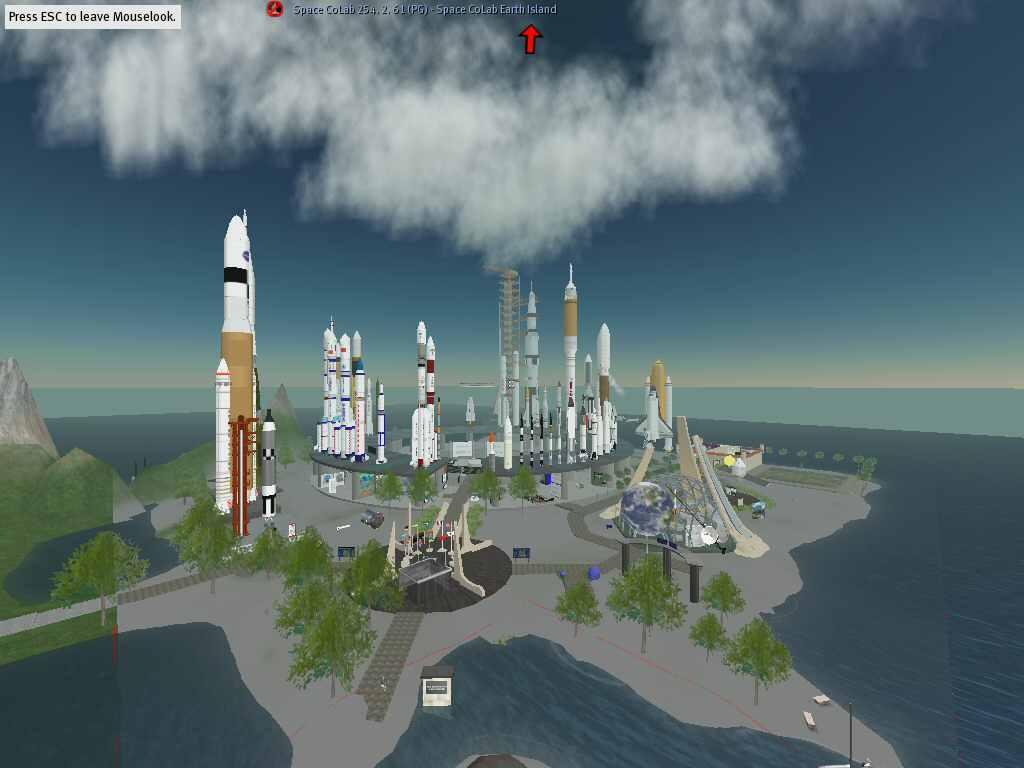
New digital technologies give us the opportunity to live not only in our usual 'First Life' but also to shift to another world and do different kinds of things which we usually do in our life, e.g.walking, speaking and different kinds of acts. The difference is, though, that in 'Second Life' we have an avatar, which does everything we ask him to do. But, anyway, when sitting alone at home, we can have the feeling of being integrated into a communicative environment and interact with different people (avatars of other people). Thus, online, virtual 3D worlds offer the opportunity for users to interact in real time with native speakers of the language they are learning.
Actually, there is a little research done on the usefulness of 'Second Life' to TEFL, but, in my opinion, they create a total immersion in the foreign language learning environment (excluding the attempts in getting used to the environment, connected with technical issues). When I first tried to enter 'Second Life', first of all I had to figure out things like who am I in the environment, how can I interact with people, what should I do in general. This took not so long, and later I was immersed in an environment where language was used intensively. So, I can say that 3D environment provides communication through language and negotiation of meaning.
 |
Eventually, further research needs to be conducted in this field, so as to find out the basic functions of 3D virtual world, especially its influence on the language learning process.


