Sunday, November 24, 2013

Learning Management Systems & Personal Learning Environments


Due to technological innovations it is possible to manage your learning in a very organized, effective, interesting and accurate way. Among those technological tools are LMS and PLE which are different from each other, but both contribute to community learning.
LMS is usually set by an institution, e.g. it can be a university. LMS gives the learners the chance to access and obtain the content, perform different kinds of activities, receive feedback, etc. It can be characterized as a centralized tool, where the center of learning and performing activities is the same tool for all the community members. Due to LMS the learners access to the collaborative environment, but with the condition of having their own accounts, otherwise communication is impossible. When performing different activities, a lot of data is accumulated there. The thing is that when you decide to leave LMS, the data remains in the system, and it is not managed by you, but by the LMS. While in PLE you manage your own data, as it is already decentralized as compared with LMS. It means that the center of the system is you and you can access to your content from different places of the web.
Both types may have their limitations and advantages, but, anyway, these are good means of community learning, sharing ideas, etc.

For more information please go to this link: http://www.youtube.com/watch?v=zDwcCJncyiw&feature=relmfu

Monday, November 18, 2013

Distance Language Learning


It is well-known that nowadays direct face-to-face communication can be replaced by online communication. It means that learning through direct instruction can be replaced by distance learning by means of technologies.
I think that for educators direct teaching is more easier, when there is face-to-face communication and interaction, when the educator can see and feel everything that happens during the learning process. While in distant teaching more energy and effort is needed from the educator to convey all the material properly and to reach all the learning objectives. I, personally, have never done distance tutoring, but I think that it would be difficult to first of all observe the learner and identify his/her needs. It would be also challenging to provide immediate feedback to the learner. All in all, everything depends on different kinds of technologies.
In spite of all the difficulties that distance learning may create, it is a very good means for the learners who live, for example, in remote areas and don't have good teachers in their area. Or, if someone's teacher has to leave to somewhere else, in this case distance learning will help them not to interrupt the process of teaching and learning.
In distance education the teachers should follow several maxims, which are also necessary in face-to-face education, but are more critical in a distance education. First of all the educator should empower the learner, for making him/her more encouraged, motivated and confident about his/her abilities. The educator should also be open, i.e. the learners should always feel free to sent the educator mails whenever they have questions connected with the lessons. The factor of being honest from the part of the educator is also very important, as they need to always tell the learners the truth about their language competence or performance progresses. Also, the educators should always provide appropriate explanation of any linguistic issue being explained, as in a distance learning they should be very careful for the learners to not miss a point.
The learners have also a lot of work to do by themselves, as in distance education they have to be more autonomous learners. They have to manage their self-management and initial motivation at first. They have to be more watchful so as to plan their work carefully. They also have to identify the learning strategies which work well for themselves. It would be better if the teacher also were aware of their learning strategies, because in that case the instruction would directly fit the learners needs.
Thus, we, as language teachers, should be very careful and aware of these factors which directly affect on the quality of distance learning.

For starting your own distance learning you can create an account with either http://www.livemocha.com/ or
http://www.busuu.com/ .

Monday, November 11, 2013

Open Sources and Educational Resources


Nowadays open sources and educational resources have become very significant tools for all people around the world. They give us the chance to feel ourselves in the shoes of global citizens. They somehow create equal opportunities for all to get to know any thing they want irrespective of their rank or other things.
Open sources refer to any kind of computer programs which are free for the general public to use. They provide social and interactive learning.
Educational resources have specific educational purposes. E.g. there are a lot of free online courses which can be very beneficial for people who are eager to learn.
Thus the most significant advantage of the OER is that it gives people the opportunity to become life-long and autonomous learners.
Here you can find a list of open courses:

Sunday, November 10, 2013

MALL in TEFL


The need of mobile phones is huge in our lives. When I want to call someone, I turn to my mobile phone, when I want to listen to music, I turn to my mobile phone, when I want to record a talk, guess what I do? I turn to mobile phone, when I want to access the internet, I again use my phone. I'm sure that many many people do the same thing. Thus, they are the inseparable part of our life nowadays. Almost everyone has a mobile phone, and besides using them for calling or receiving calls, they are also used for language learning purposes. In my opinion, the most essential benefit that the mobile phones can give EFL learners is the development of the listening skills. E.g. learners can record a talk, then listen to it, or, if it is a smart phone, it can be used for listening to podcasts etc.
Reinders (2010) mentions 20 ideas for using mobile phones in a language classroom. I will outline some of them in my blog. One of those ideas is taking notes in the phone. I think that it's really useful for taking notes and later using them for recalling some information or for writing down unknown words and then clarifying their meanings. Another function mentioned is the ability of taking photos of texts. For example, one of our classmates, Nelli, always does that after curriculum design class. She takes the photo of the homework assignment from the slides and later posts in the facebook for rest of us to use. Another function is using it for making flashcards. When I was observing one of my classmate's class at the Argentinian school, she actively used her ipad for flashcards for teaching the times. The function of the circular writing is also in the list, but I think that it is not the type of writing skills we need to develop, because it is mainly colloquial and full of contractions, slang, jargon, etc. But if the phone has the internet connection, it can also be used for writing blogs, in this case it fosters the development of the writing skills.
In my opinion, using mobile phones during classes has also its limitations, as students are very often distracted by facebook or other things. So, we have to be very careful when implementing the usage of mobile phone in TEFL. I think it's better to use them with high level students, as they are more conscious to really get the meaning of using phones in the process of language learning.

Sunday, October 27, 2013

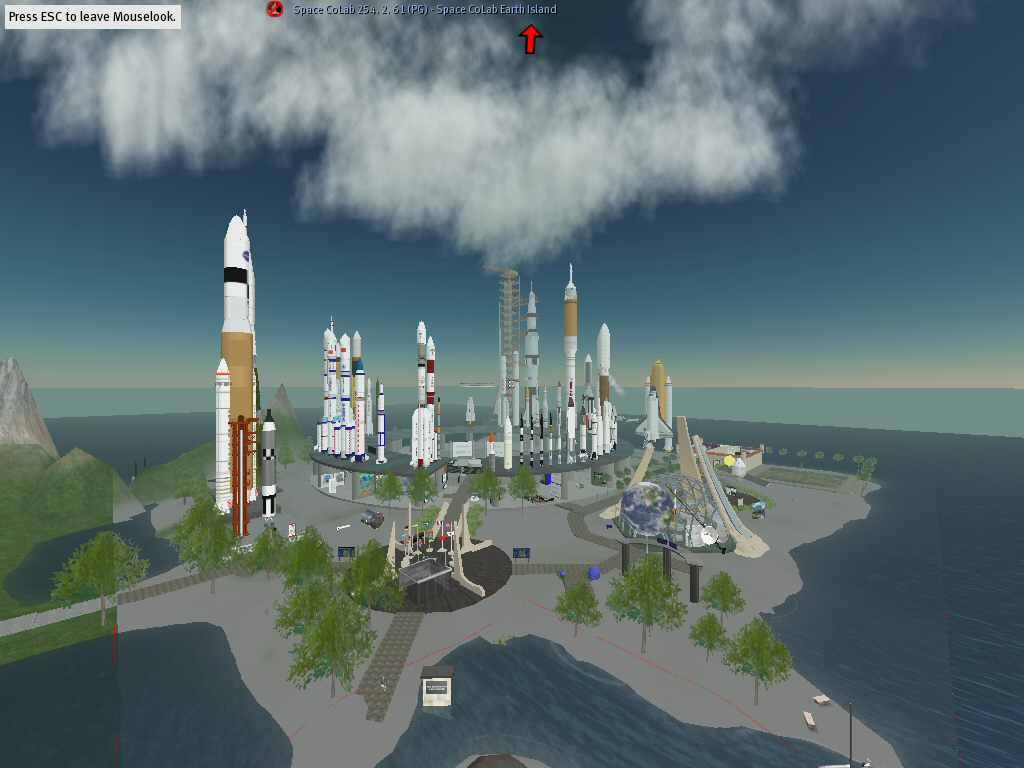
Application of 'Second Life' to TEFL

                               
New digital technologies give us the opportunity to live not only in our usual 'First Life' but also to shift to another world and do different kinds of things which we usually do in our life, e.g.walking, speaking and different kinds of acts. The difference is, though, that in 'Second Life' we have an avatar, which does everything we ask him to do. But, anyway, when sitting alone at home, we can have the feeling of being integrated into a communicative environment and interact with different people (avatars of other people). Thus, online, virtual 3D worlds offer the opportunity for users to interact in real time with native speakers of the language they are learning.
Actually, there is a little research done on the usefulness of 'Second Life' to TEFL, but, in my opinion, they create a total immersion in the foreign language learning environment (excluding the attempts in getting used to the environment, connected with technical issues). When I first tried to enter 'Second Life', first of all I had to figure out things like who am I in the environment, how can I interact with people, what should I do in general. This took not so long, and later I was immersed in an environment where language was used intensively. So, I can say that 3D environment provides communication through language and negotiation of meaning.

A research was conducted on foreign language vocabulary development through activities in an online 3D environment. The purpose of the study was to find out how the immersion in a 'Second Life' environment  affected on the improvement of the students' vocabulary and language fluency. Of course, there were both advantages and limitations. According to the case study the immersion into a 3D virtual world can create a viable language larning environment, regarding to vocabulary enrichment and fluency development. I also want to mention some of the limitations, such as the cost and time set for learning environment. Besides, we should create security for young learners, because, as in real life, in 'Second Life' aslo they can appear in inappropriate situations.
Eventually, further research needs to be conducted in this field, so as to find out the basic functions of 3D virtual world, especially its influence on the language learning process.


Monday, October 21, 2013

DGBL (Digital Game-based Learning)


Digital game-based learning is one of the most discussed areas in the field of digital technologies in learning.
When reading about this topic I remembered my childhood when I was sitting in front of the computer and playing video games for hours. My parents didn't ever forbid me doing that, they even sometimes played with me which gave me more motivation in that. I turned the computer off when I was already bored of the games. Later I started to get bored sooner, because everything was already the same and I couldn't find anything new for me to discover in those games. It is followed to say that the learning from the games had already happened, and there was nothing new for me to learn. 
Video games first of all provide children problem solving and critical thinking skills. They become creative, especially when they not only take the role of a consumer, but also the role of a producer.
With digital games learning is produced within a certain context, e.g. they don't have to read about the games and then go and play it according to the instructions. They just start observing in the context themselves which fosters their consciousness raising skills.
When playing a digital game children are not afraid of making mistakes and of being assessed. Actually, assessment happens at every moment in games, which is fun here as compared with the assessment in classrooms.
However there are also some risks in using video games. The thing is that not all the games are of good quality. One of the dangerous things is their getting addicted to some games, thus forgetting everything rest in the world. This is, of course menacing their health, e.g. the eye-sight. Moreover, computer games can be violent in their nature and affect negatively on children's character and the whole psychology. So, parents should be very careful at first stages in choosing the right games for their children. they should also often play them with their children to understand the content better and its affects on the child.
DGBL is also applied in TEFL. Games can engage children in practicing both receptive and productive linguistic skills. E.g. I leaned a lot of vocabulary items from the game "Tekken", like "start, play, exit, enter, turn on, turn off, game over, time is up, win, lose, perfect, etc.". The football game was good for developing my listening and reading skills, etc.
Eventually, technology helps children to learn in new ways and to create the models of what education might be like in future.

Thursday, October 17, 2013

The video production project.


Nowadays video production can be a good tool for making different tutorials for the students.
The process of groupwork for making our own videos was the best and the most interesting groupwork in AUA life. I was so enthusiastic about that, that I decided to work with two different groups. The video shooting process with the first group was more easier than with the second one, because it was a very authentic one and the action was all there ready for us. We had only to go to different places and to take shots. What about the second video, it took 3 whole days for us to think about the script and to shoot it. The video production process was really very interesting, difficult and also fun. The thing is that we decided to be the actors ourselves and to shoot the videos in many different places. There were even some parts which were successful only after the 30th attempt. The problem was that we needed other people also to be in the cast ( I want to say thanks to the students of other departments who agreed to cooperate with us, namely Balu, Vahagn, Mnatsakan, Narek and Ararat) and also the time was very short for making such a video, besides we had to keep it as short as possible. But, anyway, the separate parts are ready and Ripa Karapetyan is the editor, so lots of thanks to her for taking that huge responsibility. We hope that the video will be ready for tomorrow's class and we will enjoy it together.
The video tutorials were very informative and helpful for our own video production project. Me and my classmates were discussing that after watching the tutorials and having all this experiments we will approach different films and also video tutorials more critically than before. Eventually, this was a good step for us to make our own video productions for language learning purposes as language teachers. And also, who knows, maybe one day we'll become film stars as we already have the experiment.